High-Speed Handpiece Anatomy: Parts and Materials
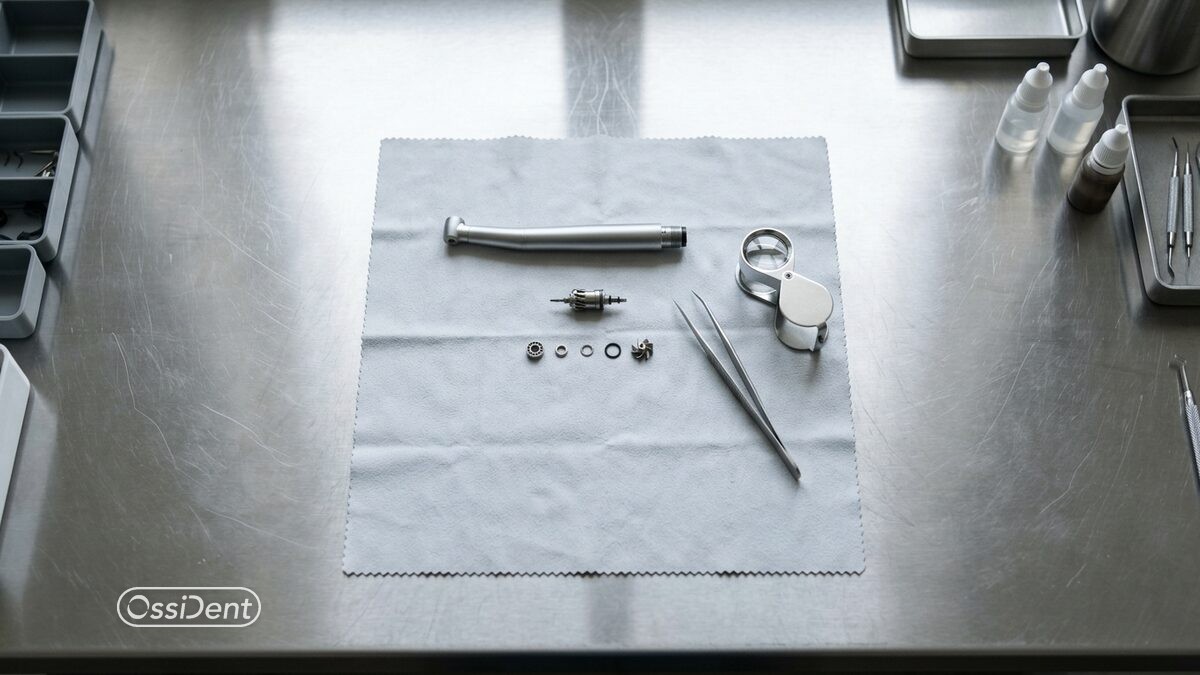
An air-driven high-speed handpiece reads as one instrument, but repair-service literature describes it as a set of distinct parts with distinct material demands. This is a component-level reference for dental teams writing purchasing specs, comparing models or keeping service records.
Repair-service literature sorts dental handpieces into three groups: high-speed, slow-speed and electric. Slow-speed units also run on compressed air but deliver higher torque for cutting, grinding and polishing, and electric units form a separate category. This reference covers the air-driven high-speed handpiece only, organized by component, because that is how service technicians, purchasing teams and equipment records tend to describe the instrument.
The air path. The drive is compressed air. It enters through the rear of the handpiece, travels up the body to the head and strikes the impeller, the central piece of the turbine. That allows the bearings to rotate, which in turn rotates the bur. Each component discussed below sits on that path.
The turbine assembly. A technical note from a handpiece repair firm describes the turbine as four parts working as one: two bearings, an impeller and a spindle or chuck. The bearings and impeller press onto the spindle to form a complete turbine. For specification purposes this matters because the turbine is a discrete, serviceable unit. Repair providers advertise repair or replacement of high-speed turbines, with technicians trained to each brand's standards, so a practice evaluating a handpiece can reasonably ask whether its turbine is offered as a replacement part and who is qualified to service it.
Bearings. Repair literature gives the bearings particular attention. One repair company's technical note links low torque, vibration, squealing noise and a slipping or dropping bur to turbine failure, and specifically to bearing failure. The same note attributes the majority of bearing failures to autoclaves and sterilizers: the sterilization process that reprocessing depends on also dries the bearings out, and lubrication is what keeps them moist. The note is candid that bearings dry up and fail over time even with lubrication, which is why the lubrication step belongs in the specification conversation rather than being treated as an afterthought. When comparing handpieces, record the bearing material, the lubricant the manufacturer specifies, and where lubrication falls relative to sterilization in the instructions for use.
Chuck and spindle. The spindle or chuck is the part of the turbine that holds the bur. Because the bearings and impeller press onto it, it is mechanically tied to the rest of the assembly, and repair literature groups a slipping or dropping bur with the turbine symptoms listed above. The chuck mechanism and the bur type it accepts are both worth capturing on a spec sheet so that service records and bur purchasing stay aligned.
Body and head. Outside the turbine, repair literature notes that high-speed handpieces differ mainly on lighting, hose connection and maneuverability or swivel function. Body material is the other line item. Ossident lists titanium alloy and steel bearings among the professional-grade materials in its range. Material is a specification to record and compare against manufacturer data, not a property to assume, so ask for the published specification of the exact model rather than relying on a product-family description.
Moisture and corrosion. Repair-service guidance warns against fully submerging a handpiece in water. A handpiece that does not dry out properly can develop internal rust, and all of its moving parts are exposed to it. The same guidance notes that once rusting is advanced, repair may no longer be an option. For a materials review, this places reprocessing method alongside body and bearing material: how a handpiece is cleaned and dried is part of how its materials are treated in daily use.
The air supply is part of the spec. An air-driven handpiece can only function with dry air, which makes the compressor an upstream component of the instrument. Guidance from a handpiece parts manufacturer recommends draining the compressor daily so water does not build up inside it, since water buildup promotes mildew that can cause compressor backups. A suggested check is to empty the drain onto a clean, moist cloth and look for dirt or mildew. The same guidance cautions that water buildup can render the handpiece unusable.
Failures that develop over time. An equipment supplier's guide notes that most handpiece problems, including worn bearings, damaged gears, air leaks and turbine failures, usually develop over time rather than appearing without warning, and that many can be diagnosed before they lead to a complete breakdown. Knowing the anatomy is what makes that practical: a team that can name the component behind a symptom can describe it accurately to a service provider and record it consistently.
A component-level spec sheet for an air-driven high-speed handpiece can capture the following:
- Body material, as published for the specific model
- Bearing material and the specified lubricant
- Whether the turbine is sold and serviced as a replacement assembly
- Chuck mechanism and accepted bur type
- Hose connection type, lighting and swivel function
- Reprocessing, drying and lubrication steps from the instructions for use
- Air supply requirements, including dry air at the compressor
Ossident's catalog includes high-speed and electric handpieces for dental teams. For model-level specifications, quotes or wholesale pricing for verified partners, contact the Los Angeles office at sales@ossident.com or +1 (213) 814-2693.
This article is informational and is not medical advice. Equipment, reprocessing and clinical decisions should always be made in consultation with a qualified clinician, the manufacturer's instructions for use and a qualified service technician.